AsterSearch
Full-text search engine using BM25 and inverted indexes, exposed as both library and HTTP service.
Overview
AsterSearch is a backend-centric full-text search engine project. It implements an inverted-index architecture with BM25 ranking and can run as a standalone HTTP service or as an embeddable library.
Problem / Context
Application teams often need search capabilities without adopting a heavy external platform too early. The goal was to build a compact engine with clear indexing/search contracts and practical operational controls.
What I built (your responsibilities)
- Implemented document indexing and query processing primitives in Go.
- Defined index/schema APIs and search endpoints (
/v1/search, index/admin routes). - Structured storage around segment concepts to support incremental indexing and merging.
- Added highlight/snippet handling and observability-oriented endpoints (
/v1/metrics,/v1/health).
Architecture
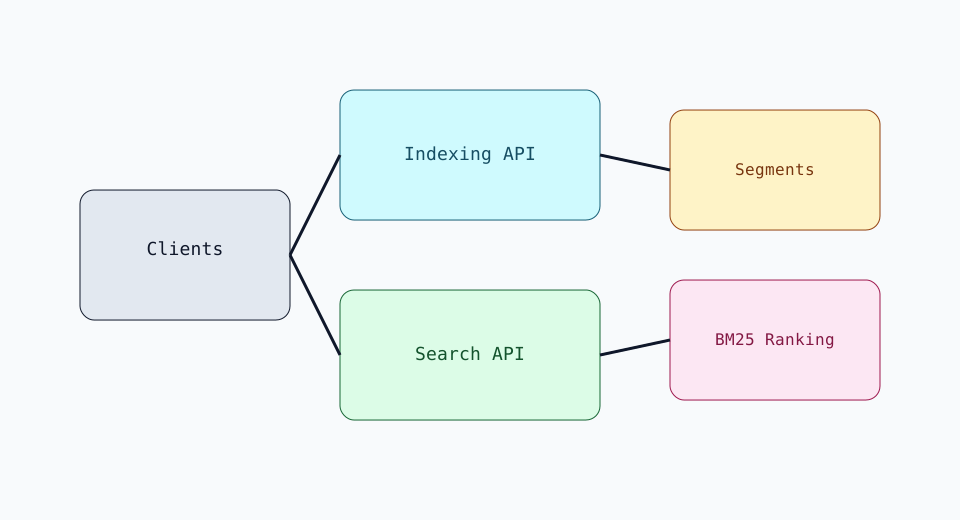
The service accepts batched indexing requests, tokenizes and writes postings/doc stores into segments, then serves ranked BM25 results from query endpoints with optional highlighting.
Tech stack
- Go
- HTTP REST endpoints
- Inverted index + posting lists
- BM25 scoring
- k6 load-test scenarios
Key challenges & solutions
- Challenge: Keeping indexing and query flow understandable. Solution: Split responsibilities into schema registry, index/search internals, and storage segments.
- Challenge: Balancing retrieval quality with speed. Solution: Combined BM25 ranking with field weighting and posting-list based term lookups.
- Challenge: Preventing operational blind spots. Solution: Included health/metrics endpoints and documented load-test thresholds.
- Challenge: Supporting controlled write/admin access. Solution: Added token-based protection options for admin and indexing endpoints.
Outcomes / current status
The project is in a stable, documented state with working API contracts and load-test scaffolding. README targets mention throughput goals (including >100 queries/s target on a single node) and latency/QPS validation via loadtest/.